
This isn't a weekly recap. Everything below dropped in the last day and a half.
If you're building anything that touches AI agents, here's the week you missed.
Anthropic: Claude becomes a background process
Two back-to-back announcements:
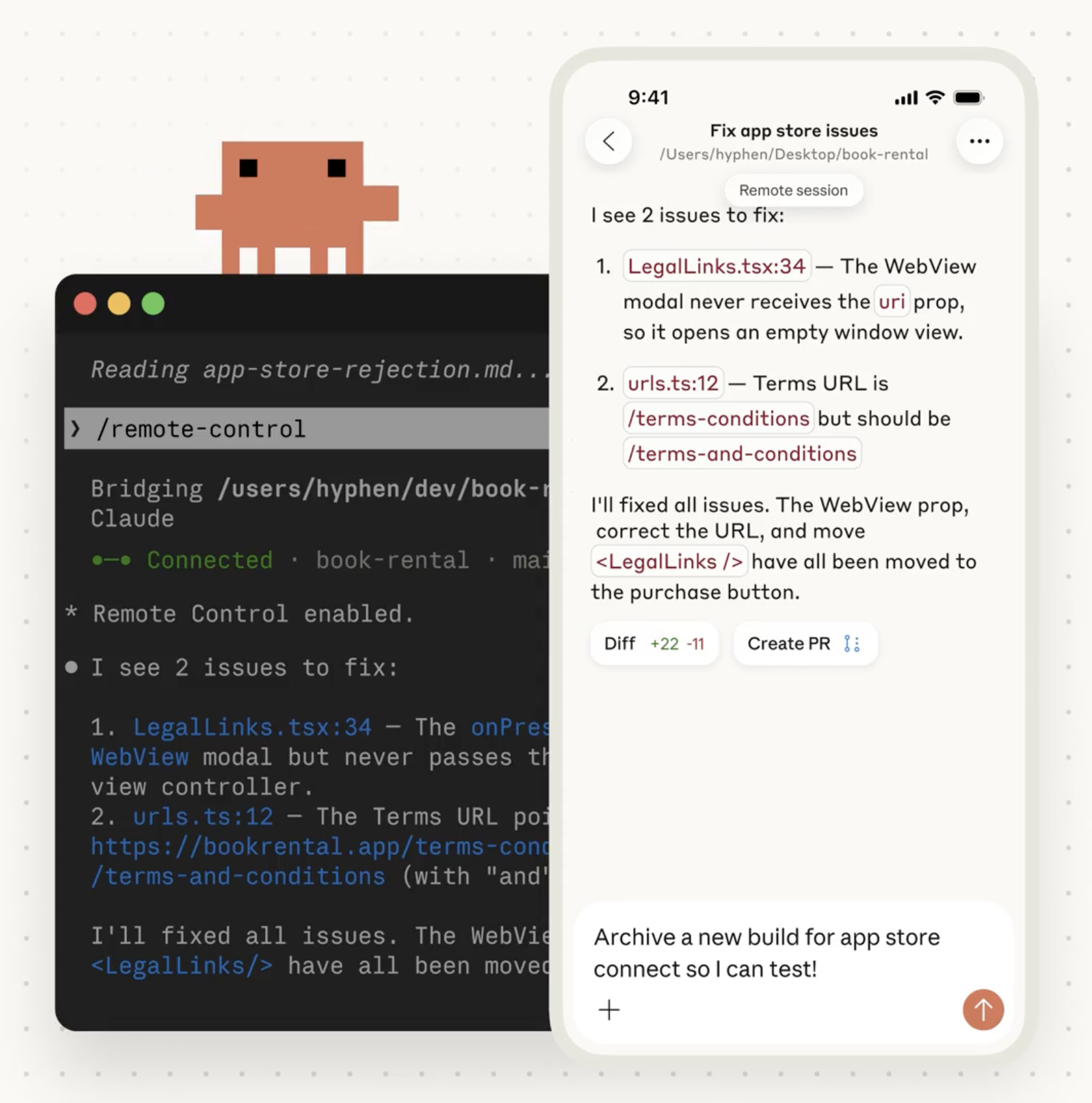
Remote Control for Claude Code. Kick off a coding task in your terminal, walk away, pick it up from your phone via the Claude app or claude.ai/code. Claude keeps running on your machine while you're gone. It goes from "pair programmer sitting next to you" to "engineer working the night shift."
Scheduled Tasks in Cowork. Claude can now run recurring tasks on a schedule: morning briefs, weekly spreadsheet updates, Friday presentations, daily Slack summaries. Cron job with judgment. It decides what's worth surfacing and skips the rest.
The through-line: Anthropic is turning Claude into something persistent. Not a tool you open and close, but a process that runs whether you're watching or not.
Google: Opal gets an agent brain
Google Labs upgraded Opal, their no-code visual builder for AI workflows. The big addition is an "agent step" that looks at your goal, figures out how to get there, and calls the right tools on its own (Veo for video, web search for research, etc.).
They also shipped:
- Memory — persists your name, preferences, and style across sessions
- Dynamic Routing — the agent picks its next step with a "Go to" tool instead of following a fixed path
- Interactive Chat — the agent can pause and ask the user for missing info mid-workflow
The play here is enterprise workflows where agents orchestrate other tools. Opal already connects to AWS, Salesforce, Databricks, Canva, Discord, Docusign, and dozens more. Basically multi-agent orchestration with a drag-and-drop UI.
Perplexity: "Computer" does everything
Perplexity launched Computer. Research, design, code, deploy, project management, all in one system. It remembers your past work, runs on Perplexity's infrastructure, and has persistent memory, file and web access, and hundreds of connectors.
They're also live-streaming curated Computer tasks at perplexity.ai/computer/live. Showing your AI working in real time, publicly, where it might stumble? Takes nerve.
The idea is you go from managing one task at a time to running hundreds of active projects. Clear your to-do list, move things forward, spin up a side project. If Claude is becoming a background engineer, Perplexity wants to be a background company.
Cloudflare: One engineer rebuilt Next.js in a week
This one's different. Cloudflare published a post about vinext, a drop-in replacement for Next.js built on Vite that deploys to Cloudflare Workers. One engineer. One AI model. One week.
Builds up to 4x faster, 57% smaller bundles, already running in production. Total cost: $1,100 in tokens.
This isn't a product announcement. It's a data point. A framework that would've taken a team months got prototyped in seven days by one person with an AI. That's Karpathy's thesis made concrete.
Apple: $600B on AI infrastructure
The hardware layer is moving too. Tim Cook announced Apple is putting $600 billion toward US manufacturing and AI infrastructure. Mac mini gets US production for the first time later this year. They're ramping up AI server capacity and opening a new Apple Advanced Manufacturing Center.
Not directly about agents. But all of the above runs on compute, and more AI servers means more capacity for the persistent, always-on agents that Anthropic, Google, and Perplexity are building. The infrastructure has to exist before the agent economy can scale.
Karpathy: "Programming is becoming unrecognizable"
Andrej Karpathy posted a thread that nailed the moment:
It is hard to communicate how much programming has changed due to AI in the last 2 months: not gradually and over time in the "progress as usual" way, but specifically this last December. Coding agents basically didn't work before December and basically work since — the models have significantly higher quality, long-term coherence and tenacity and they can power through large and long tasks, well past enough that it is extremely disruptive to the default programming workflow.
His example: he was building a video analysis dashboard for security cameras and wrote one prompt. SSH into a DGX Spark, set up keys, set up vLLM, download and benchmark Qwen3-VL, build a web UI, configure systemd, write a report. The agent ran for 30 minutes, hit issues, researched fixes, resolved them, wrote the code, tested it, debugged it, set up the services, and came back with the report. He didn't touch anything.
Three months ago that's a weekend project. Now you kick it off and check back in half an hour.
Programming is becoming unrecognizable. You're not typing computer code into an editor like the way things were since computers were invented, that era is over. You're spinning up AI agents, giving them tasks in English and managing and reviewing their work in parallel. The biggest prize is in figuring out how you can keep ascending the layers of abstraction to set up long-running orchestrators with all the right tools, memory and instructions that productively manage multiple parallel Code instances for you.
His caveat: it's not perfect. It needs direction, judgment, taste, oversight, hints. Works better in some scenarios than others. But the leverage from good "agentic engineering" is very high right now.
What's still missing
Every announcement this week points the same direction: agents that run on their own. Scheduled, persistent, calling tools and managing projects without someone hovering over them.
But they all live in walled gardens.
Claude agents call Claude tools. Google agents call Google connectors. Perplexity agents run on Perplexity infrastructure. There's no way for a Claude agent to hire a Google agent, or for a Perplexity workflow to pay a third-party service on the fly.
That's the gap we're building into at nullpath. Agents that need to call other agents across platforms need a payment and discovery layer that doesn't care who built them. HTTP 402, agent wallets, an open registry.
We're early. But this week made it pretty obvious where things are headed.